Key takeaways
- Mike Smith used AI-generated songs and streaming bots to fraudulently generate billions of plays and earn around $10 million in royalties across platforms like Spotify.
- His AI music scam relied on uploading hundreds of thousands of tracks and distributing fake streams across them to bypass detection systems.
- This AI streaming fraud exposed major flaws in the music streaming revenue model, where fake streams dilute earnings for real artists.
- The case marks a turning point for AI in music, pushing platforms to improve anti-fraud systems and raising broader concerns about AI-generated content abuse.
AI-generated summary
Estimated reading time: 11 minutes
Since the rapid rise of AI, dozens of controversies have erupted each month. They shake up the streaming world, redefine its power dynamics, and force industry players to adapt. But in 2024, one of them made more noise than the others. It was of such a staggering scale and revealed numerous flaws in the platforms’ systems. The man who made millions with AI-songs…and got caught.

A truly incredible story: hold on tight.
The man who made millions with AI-songs…and got caught – Meet Mike Smith!
Michael Smith doesn’t seem like a con man. Not at all. More like a hyperactive businessman, with his eyes on every opportunity to make money. Already the owner of several medical clinics, he’s also passionate about music. And he dreams of achieving success as an artist. It’s what he’s wanted to do since he was a child.
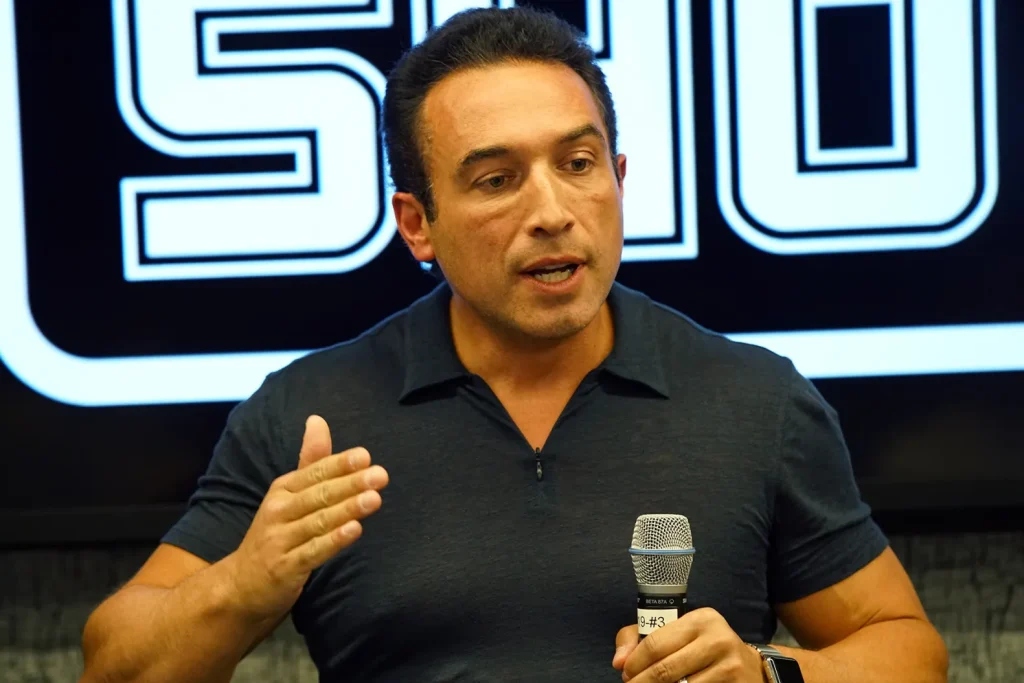
He’s skilled at playing guitar, bass, keyboards, and other instruments. But he struggles to launch his career until he has enough money to pursue his ambitions. With the money from his various businesses, he approaches bands and produces songs for them.
Rap music’s newcomer
He also makes sure to create business opportunities for them, and soon, the name Mike Smith begins to make rounds in the music industry. In the rap scene, he’s crossed paths with the well-known collective Nappy Roots, rapper Crooked I, Juicy J, DJ Whoo Kid, Royce Da 5’9″, and many others. These are credible artists, and have been for a long time. The songs he writes, sings, or composes are used by numerous producers and fuel his reputation. Michael Smith is sure of his talents; his confidence is at its peak, and he doesn’t hesitate to proclaim himself one of the most valuable musicians in the industry. While this arrogance amuses some, others are irritated.

But no matter, Mike Smith is on the verge of achieving his dream: he’s made it in music, that much is certain. In 2016, his face became nationally recognized: he created a rap-focused reality TV show, One Shot, which was broadcast on BET, where he served as a judge. There will be only one season; the winner won’t have a career, and suspicions of fraud surround the financial rewards promised to the winner, but Michael Smith emerges more famous and even more self-assured.
Breaking Through
In 2017, he achieved success with his song “You’re My Kind of Beautiful,” which reached number 35 on the US Billboard charts. While some of his collaborators find certain of Mike Smith’s business dealings questionable, the forty-something isn’t worried.
In 2018, a man named Hay, also a musician, with whom Mike had recorded an album called Jazz, confronted his partner after noticing that their joint album had suddenly climbed to the top of the US sales charts, but without any media coverage or particular public attention.

Mike replied that he had asked all the employees at his clinics to stream the album. But he was lying, of course, and had already started setting up his scams. Mike even boasted about his monthly Spotify listener count in June 2018, sharing a screenshot on Instagram. Hay had tried to alert the media and journalists about Mike’s potential fraudulent activities and had even written to Spotify, but his emails and letters went unanswered.
Nothing but fake?
At the same time, Mike Smith’s solo music was also experiencing unexpected success. Both on YouTube and in streaming statistics, the songs he was credited on were racking up millions or hundreds of thousands of views and streams. It almost seemed as if, in just a few weeks, Mike Smith had become one of the most famous musicians on the planet. Under the YouTube videos of his band’s songs, there were only a few comments, some of which seemed fake, while the videos themselves were accumulating millions of views.
Mike Smith often uses the comments section and the positive feedback it generates to boast and demonstrate how engaged his fans are. Several collaborators describe him as vain and obsessed with his fame. Suspicious, but for the moment, nothing concrete from a legal standpoint. Especially since his clinics are facing fraud charges and a lawsuit estimated at several hundred thousand dollars. The net is closing in.

In the meantime, Mike Smith continues to make music and enjoy his newfound fame. Except that the dream only lasts so long. And one day, in September 2024, the FBI comes knocking on Michael Smith’s door. To handcuff him and indict him.
The beginning of the end.
The man who made millions with AI-songs…and got caught – The AI temptation
As we’ve said, Mike Smith is a businessman. He loves money and predicting trends, and he doesn’t hesitate to jump on lucrative business opportunities when they present themselves. Deeply involved in the music industry, Mike Smith saw the potential of Artificial Intelligence (AI) in the late 2010s.
AI was already a topic of discussion in the corridors of record labels and streaming platforms, but in 2017, the barriers to its widespread adoption were still low. And that was a golden opportunity for someone like Mike Smith.
He got to work and started thinking about new ways to rake in the cash. His process was relatively simple. Mike Smith used an AI-powered song generation service to create hundreds of thousands of songs. You read that right: hundreds of thousands.

He then uploaded these tracks across all the music streaming platforms. Once the songs are online, he uses automated bots—robots—to stream them billions of times. In total, nearly 10,000 bots are used. Here too, the operation is repeated on all streaming platforms. The numbers swell rapidly, and the royalties, amounting to millions of dollars, pour into his bank account.
Ten million, to be exact, accumulated over several years, from 2017 to 2024. At the height of his operations, Mike Smith generated 660,000 fake streams per day.
Piracy at its finest
But be warned: Mike Smith isn’t naive. He knows that automatically and repeatedly streaming a song can raise suspicion. To minimize the risk of detection, he configures his bots to stream the same song only a few times. The streams are spread across thousands of songs and are therefore diluted within the sheer volume of content. He takes it a step further: to complete the illusion, he generates fake song and artist names in alphabetical order.
This produces dubious results, such as “Zygopteraceae” or “Calvinistic Dust.” If this weren’t real, one could easily mistake it for a parody, so exaggerated does it all seem to be.
The emails recovered by the FBI are revealing: they show the extent to which Mike Smith and his collaborators sought to circumvent the anti-fraud rules that platforms were increasingly implementing. They simply needed to find even more cunning techniques to outsmart them.
Teamwork
While the names of those involved are currently confidential, individuals who work with an AI generation tool are also implicated. It’s therefore not just Mike Smith, but a meticulously organized scheme. Especially since, over the months, the scammers have refined their technology, making it increasingly undetectable by streaming platforms. They also offer these deals to lesser-known musicians, promising them thousands of dollars in monthly revenue.
It’s difficult to know how much Spotify, TIDAL, SoundCloud, Apple Music, and others actually paid Mike Smith. Spotify has released figures, but they remain unverifiable. And the other platforms have refused to comment on the matter. They are likely hesitant to admit that their fraud detection systems were less effective than expected.

It’s worth remembering how the music streaming revenue model still works today. The royalties artists receive don’t correspond to the actual number of streams each song generates. But rather, it’s a payment based on a percentage calculated from all the streams generated on the platform.
Platforms like Deezer are implementing individualized payments, but progress is slow globally, and lesser-known artists struggle to find a reliable source of income. In this context, the billions of streams amassed through Mike Smith’s schemes are further eroding the pie that smaller, lesser-known artists have to share.
By setting up this scheme, Mike Smith has not only stolen the work of the artists who generated his AI-generated songs but also that of other artists, from whom he has indirectly defrauded.
The man who made millions with AI-songs…and got caught – The consequences
This is the first time in the United States that a man has been convicted for this type of AI-related practice. It is therefore a pivotal step in protecting artists’ rights, but also a wake-up call. The Mike Smith case has highlighted the shortcomings of streaming platforms.
They were unable to regulate the flow of these AI-generated songs promptly and, even more worryingly, were slow to realize that the streams of these songs were primarily due to entirely artificial bots.

Some, after the case, say that what Mike Smith did was actually a good thing. It demonstrated how much the streaming system needed to be overhauled. And it forced streaming services to put up stronger barriers to the proliferation of AI. Given the latest news, and in particular this report from Deezer, concerning the development of these technologies, it’s not certain that this has had the desired effect, but that’s another matter.
Others believe that even if the conviction is normal and justified, it’s ironic that streaming platforms doing essentially the same thing aren’t being held accountable. We remember the controversy surrounding Spotify when a journalist revealed that the Swedish service had replaced some songs in highly listened-to playlists with AI-generated versions, without disclosing it, thereby depriving real musicians of potentially substantial earnings.
Is Mike Smith some Robin Hood of music streaming? Far from it. But this case has had the merit of reigniting the debate around Artificial Intelligence and, above all, of revealing the flaws in a system increasingly criticized.
The man who made millions with AI-songs…and got caught – Guilty!
Since his arrest in 2024, Mike Smith has been released on bail. He has been accused of three counts of wire fraud, wire fraud conspiracy, and money laundering conspiracy. In total, he faced up to sixty years in prison. Now in his fifties, Mike Smith thought he could therefore spend the rest of his life behind bars. To justify the severity of the potential sentence, American lawyer Damian Williams states:
“Through his brazen fraud scheme, Smith stole millions in royalties that should have been paid to musicians, songwriters, and other rights holders whose songs were legitimately streamed.”
At first, the defendant categorically denied the accusations, and his lawyer said he was confident his client could prove his innocence.

But last Thursday, during his trial, Mike Smith pleaded guilty. Yes, guilty. He changed his line of defense and admitted he did, indeed, conspired to commit wire fraud.
U.S. Attorney Jay Clayton stated:
“Michael Smith generated thousands of fake songs using artificial intelligence and then streamed those fake songs billions of times […] Although the songs and listeners were fake, the millions of dollars Smith stole was real. Millions of dollars in royalties that Smith diverted from real, deserving artists and rights holders. Smith’s brazen scheme is over, as he stands convicted of a federal crime for his AI-assisted fraud.”
He is now scheduled for full sentencing in July and faces up to five years of imprisonment. He also agreed to pay $8,091,843.64 under his plea agreement. That’s way less than the 60 years of prison initially requested by the U.S. court.
But Mike Smith will likely be heading to jail in the coming months, bringing an end to a two-year investigation. A major turn for the fight against AI-related fraud in the music industry!