The iPod is back. You read that right, but we’ll rewrite it to make sure you understand: the iPod is back. This device, which seemed to belong to the past, is once again attracting a young audience eager to break away from the all-digital world. Behind this lies a lot to analyze. And you know us: we’re not shy about deciphering the latest market developments. The iPod is back, and what does it mean?
Estimated reading time: 9 minutes
Key takeaways
- The iPod is making a surprising comeback among Gen Z, fueled by nostalgia, digital detox culture, and a growing rejection of algorithm-driven music streaming platforms.
- Searches for “iPod Classic” and “iPod Nano” surged in 2025 and 2026, driving secondhand prices as high as $600 and reviving interest in offline music listening.
- This return of the iPod reflects a broader movement toward intentional music consumption, physical media ownership, and reduced screen time in response to the dominance of streaming services.
- While Apple is unlikely to relaunch the iPod soon, the trend highlights growing dissatisfaction with digital ecosystems and renewed interest in controlling personal music libraries and listening habits.
AI-generated summary
The iPod is back: the context
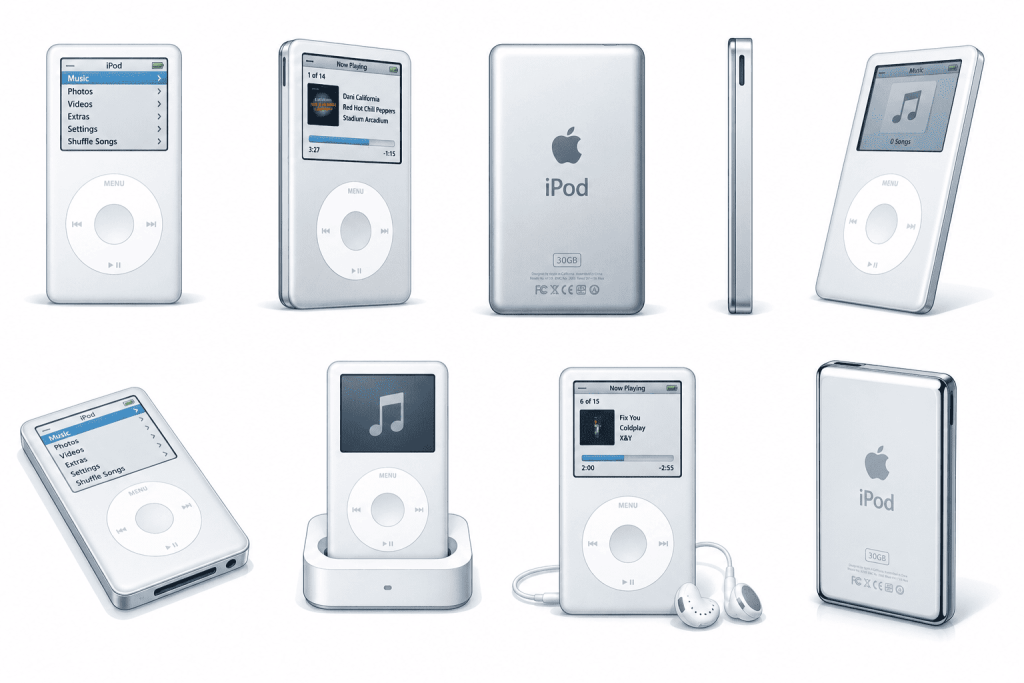
It’s been four years since iPods were discontinued. In 2001, when Apple launched its iPod, a revolution was underway. Small, portable, and allowing for on-the-go music listening, it quickly became a global phenomenon, selling millions of units—450 million, according to Apple’s figures.
A success, you say? Not just that: an object that changed the way we listen to and consume music. Combined with the power of iTunes, the iPod was a game-changer, reshuffling everything and profoundly altering the entire music industry. Gone were the bulky, circular CD players that were difficult to fit in a pocket.
With the iPod, everything was compact, and it could hold hundreds or thousands of songs, all in a device as small as possible. iTunes had shifted everything to digital; the iPod transformed that digital experience into a portable physical object. The two worlds collided, artists and audiences adapted quickly, and years later, this ecosystem gave rise to streaming platforms.
But history, with a capital “H,” often repeats itself. And what once disappeared returns to the forefront.
Trending!
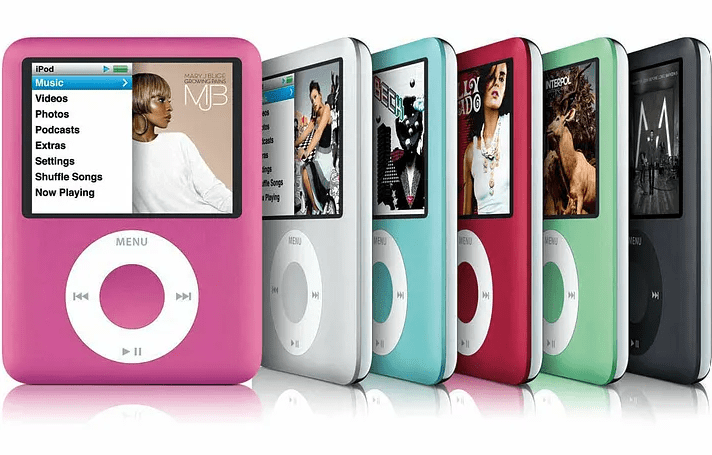
According to Google Trends, searches for “iPod Classic” and “iPod Nano” increased significantly in August 2025 and April 2026, and remained at high levels thereafter.
The result? A resurgence in purchases on resale platforms, where the selling prices of models unavailable for four years have skyrocketed. Up to $600 is now being asked for one of the iPod models. That’s more than many smartphones, which allow you to do dozens more things than an iPod can.
But no matter: the trend is very real and remains a hot topic among tech experts. Will it create a tipping point? Not certain, but it’s undeniable that everything is heating up.
Four years is a short time. But in the tech world, it feels like an eternity. In four years, a lot has changed. Music streaming platforms have tightened their grip on the industry, becoming indispensable. They’ve taken over everything: listening habits, ways of discovering music, audio content—everything.
Having become essential, sometimes at the expense of artists and their earnings, they’ve made the old world obsolete. Well… not entirely, to be honest.
The iPod is back: why?
In recent years, physical media—vinyl records, CDs, and even cassettes—have made a comeback, and sales have skyrocketed. Most artists now distribute their music in physical format, sometimes through special editions. They know their audience, often young, craves things they can touch, display on a wall, or add to their collection. Some don’t even listen to the vinyl records they buy. What matters is owning something, not just enjoying cultural products digitally. Some artists even use wired headphones and vintage imagery, like iPods, in their promotional strategies.
An old-school feel has slowly re-emerged, particularly driven by Gen Z, a generation born in the late 1990s and early 2000s. They maybe want to recapture that characteristic click of the navigation button, that way of browsing for minutes between lists of artists and albums, without being able to type the desired track on a digital keyboard.
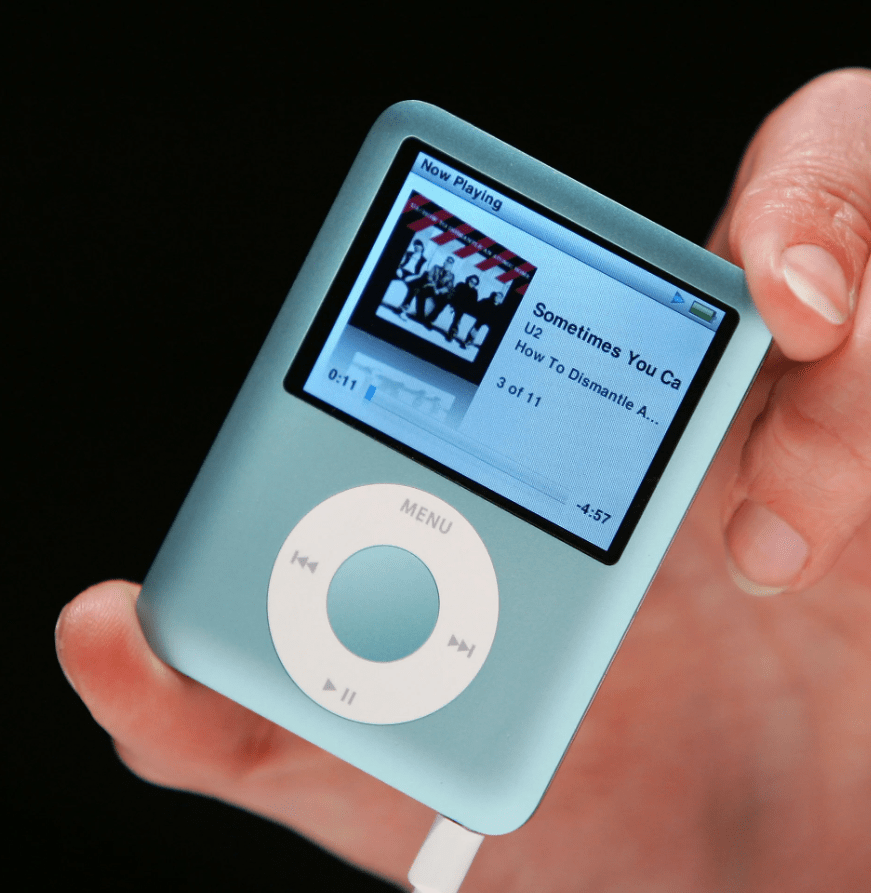
They want their listening experience to be free from notifications, to regain intentionality and choice, to use a product for only one purpose, even though devices are now capable of doing everything. Taking back control: that’s what Gen Z desires. To become attentive again, to embark on a digital detox, to curb the omnipotence of scrolling. Nostalgia has become cool, even a marketing tool.
Can Apple bring the iPod back?
Even Tony Fadell, considered “the father of the iPod,” has called for the iPod’s return, as he told Business Insider:
“I think there are smarter ways of making an AirPod that has an iPod in it. So, I think they need to bring back the iPod.”
Using an iPod today is like stepping back in time, immersing yourself in an anachronistic way of consuming music, yet one with an incomparable feel.It’s also about choosing to reduce screen time and becoming aware of how much we’re bombarded by noise we’re no longer even conscious of. Is it a pose? Perhaps.
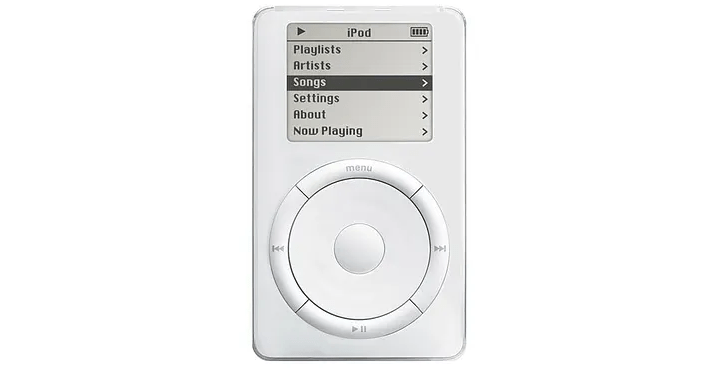
Recent years have seen the emergence of photos of celebrities with wired headphones and an iPod in hand, as if they were trying to project an image of being disconnected from the reality of rampant digitalization. This is sometimes sincere and authentic, but there’s also, perhaps, a degree of superficiality in this emphasis on things that no longer exist.
As if some people want to show at all costs that they are the antithesis of current trends. Or, as is digital models are running out of steam, not having a smartphone to listen to music is now trendy. A way to differentiate yourself from the mass. The iPod is back, and does it mean a small revolution is coming?
The iPod is back, but what could it change?
For now, let’s be honest: the iPod’s resurgence remains a relatively isolated phenomenon. It’s an amusing detail, but one that can’t be generalized since Apple doesn’t seem ready to release new models. The secondhand market is thriving, but without new products, it could quickly stagnate, or even dry up.
What’s interesting is what this says about the digital world. A young generation seems to have had enough of the omnipotence of streaming platforms, of the reign of algorithms. And they want to break free from it.
They want to enjoy music without distractions, for their choices to be dictated only by what they truly want to listen to, and not by what they’re given. The younger generation wants to be active, not passive, prisoners of choices that aren’t entirely their own. They want to transfer digital files to their computers—files they’ve acquired by buying physical music—and then upload them to their iPods, being mindful of the remaining storage space on their devices.
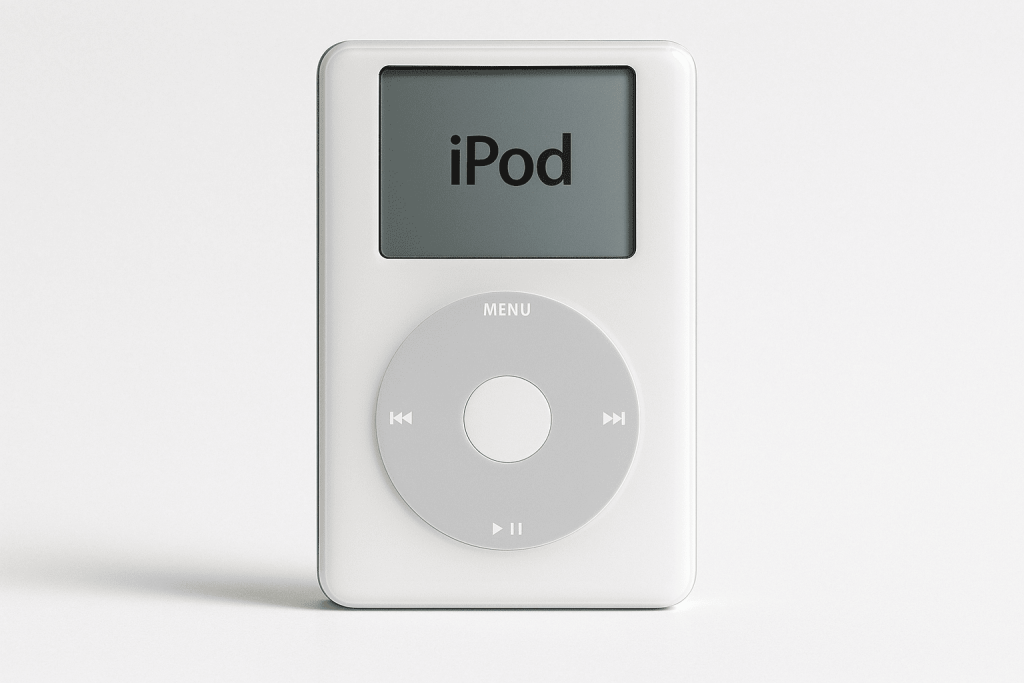
The notion of effort is regaining ground, along with a sense of control. These are things we lost as music streaming services took over. No more data overload, no more thousands of tracks they don’t remember liking; the iPod lets them stay in constant contact with their tastes. It’s a handcrafted feeling, rooted in a world that no longer exists, or at least one that has been gradually devoured.
Downloading again?
People might choose to buy an album on Bandcamp, where artists are fairly compensated. And then listen to that album on their iPod. Without ever again using streaming platforms. This resurgence of the iPod is therefore also a kind of revolt against a system deemed unfair. But things are slowly falling into place: legal album downloads aren’t increasing. They may even be declining, which complicates a return to an economy disconnected from the world of music streaming, at least for the time being.
As we’ve said, the phenomenon is still too isolated to have a real impact on the world of music streaming. But more than the phenomenon itself, it’s the ideas it symbolizes that could well have a long-term impact. A digital discontent that has been simmering for several years now. With all that this implies in terms of artificial intelligence, copyright infringement, and the loss of control artists have over their art and earnings.
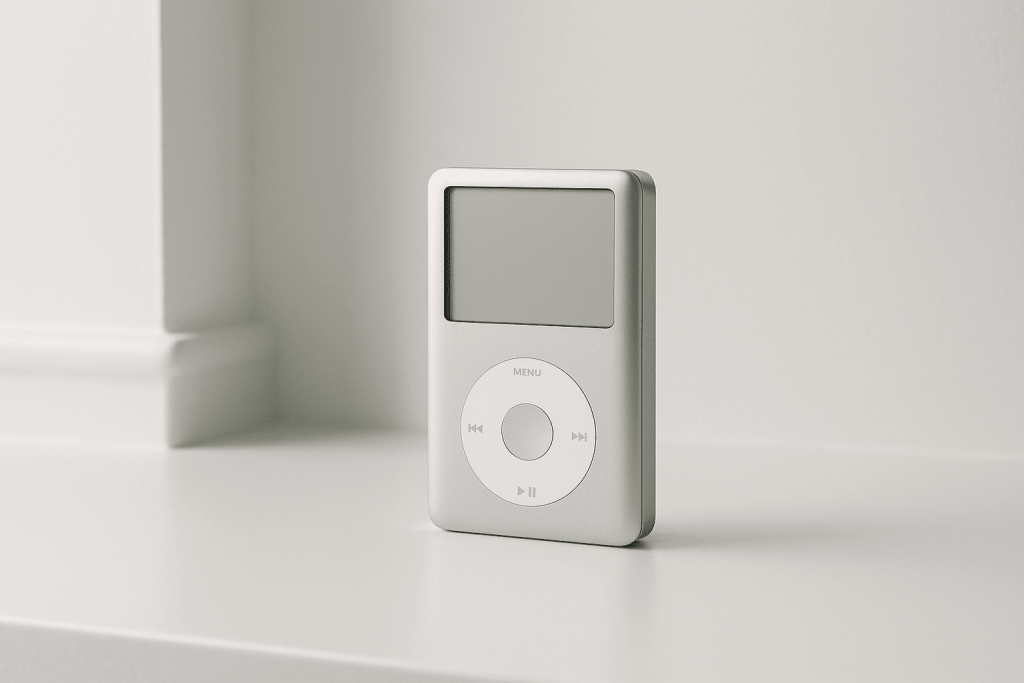
Many people have taken up these issues. They had an impact when tens of thousands of users left Spotify to migrate to more ethical platforms, like Qobuz. The return of the iPod fits into this logic: that of a growing disengagement from digital technology.
iPods are back, certainly, but it’s really Gen Z that’s starting to take control.
And this takeover could well, in a few years, have led to profound changes in our digital societies.
What about Soundiiz?
Let’s say it right off the bat: Soundiiz has little to do with the return of the iPod, and won’t be able to help you organize your music library if you only use audio files. We indeed don’t have the right to manipulate MP3 and other audio files, as we only have access to the streaming platforms’ APIs.
If you wish to transfer files you downloaded from your computer to Soundiiz, you can’t do so.
But there are many other things we can do!
If you, like a growing number of people, lean towards iPods and are tired of having thousands of songs on your playlists that you don’t listen to, Soundiiz can help. By connecting your streaming platform – and we mean any platform, Spotify, Apple Music, Deezer, YouTube Music, Amazon Music, TIDAL, Qobuz,… – to our services, you’ll be able to manipulate your music data in seconds. You can delete songs, organize your playlists, download them, change their names, and lots of other things that can be pretty hard to do when using your streaming service.
Just like new iPod users want, Soundiiz puts music and you at the center and makes your daily use of streaming platforms easier.