Why is nostalgic music becoming more popular? Old songs are finding new audiences through TV shows, films, TikTok trends, and streaming recommendations. At the same time, nostalgia for bygone eras is driving users to stream vast catalogs of music from past decades. Streaming platforms make it easier than ever to rediscover these songs, while viral moments can turn forgotten hits into global sensations. But why do we listen to so much music from the past? Is it an unconscious act of resistance against algorithms and the proliferation of artificial intelligence? Are we seeking refuge in the past to forget the world’s rumblings? From the rise of nostalgic music to streaming platforms resurrecting artists from yesteryear, we explore these existential questions, backed by data!
Estimated reading time: 1 minute
The rise of nostalgic music in numbers
Luminate, a company that has tracked data across the streaming landscape—covering both visual and musical content since 2008 —estimates that by the first half of 2026, about 60% of the music played on streaming platforms will have been released five years or more in the past.
Around the same time—early 2026—a wave of social media posts emerged celebrating 2016, a decade earlier. It felt like a different era. Wired headphones were in vogue. Instagram posts were blurry and hashtag-heavy. Pokémon Go had the whole world hooked. And the “Mannequin Challenge” had everyone freezing in place. 2016 also marked the dawn of the era dominated by music streaming and algorithms.
Back then…
This period is now associated with a certain innocence—a time when social media seemed less cruel and less performative. Reality was quite different, but time has a way of smoothing out memories, leaving only the most pleasant ones. Naturally, the music from that era—and those that came before—has followed the same trajectory. Hits from 2016—by artists like Major Lazer, Justin Bieber, Mike Posner, or Desiigner—have found their way into TikTok. The result? Their streaming numbers have skyrocketed.
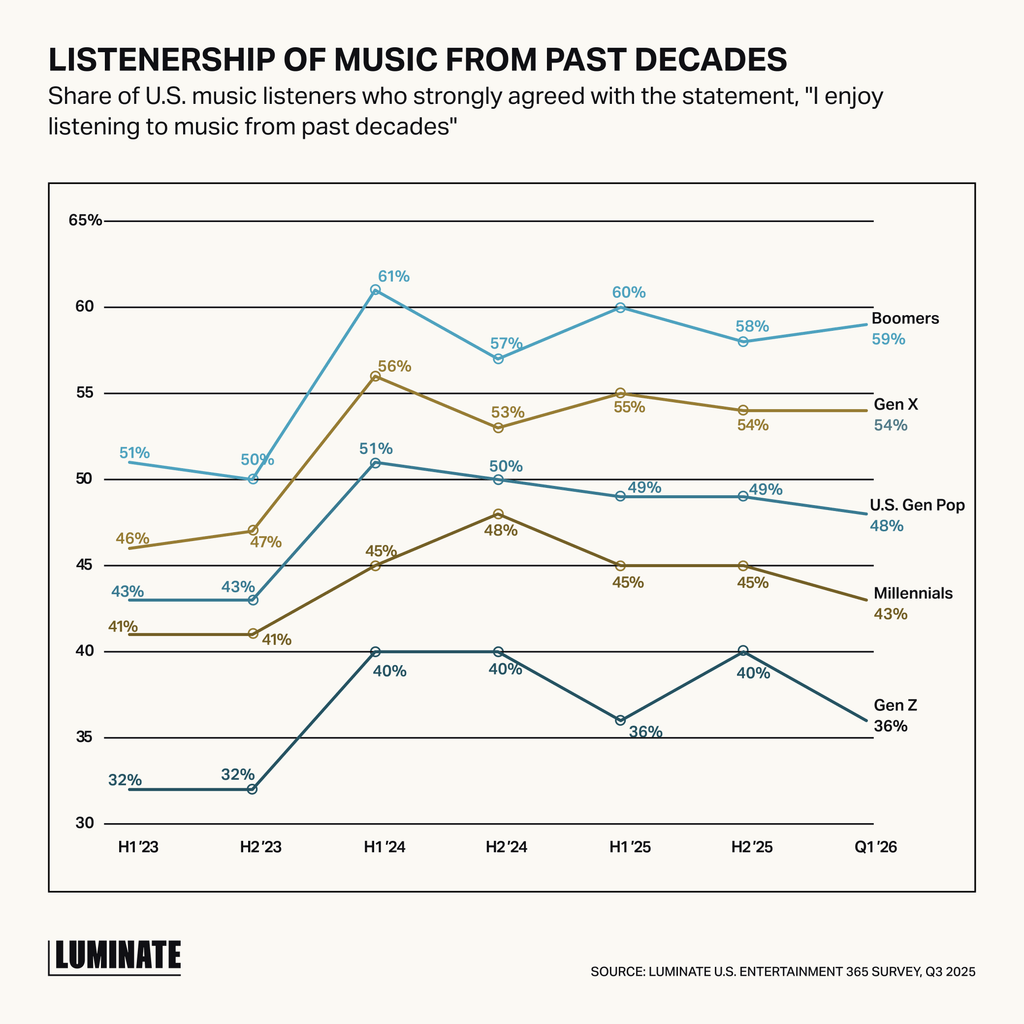
A 2026 study by Luminate puts it clearly: “For each generation, a greater share of music listeners now say they enjoy listening to music from past decades versus 2023 […] Luminate data suggests young adults age into nostalgic listening and, in fact, are the most likely to pursue nostalgic feelings through music. Even compared with older generations, U.S. music listeners ages 18-34 are the most likely to say they play music to set a nostalgic mood.”
All of this is a direct result of music streaming, where anyone can switch, in a split second, from a 1940s blues song to the latest track by The Weeknd. It is as if music were no longer tethered to a specific date. As if the past and the present now existed on the very same timeline.
How TV Shows and Films Bring Old Songs Back
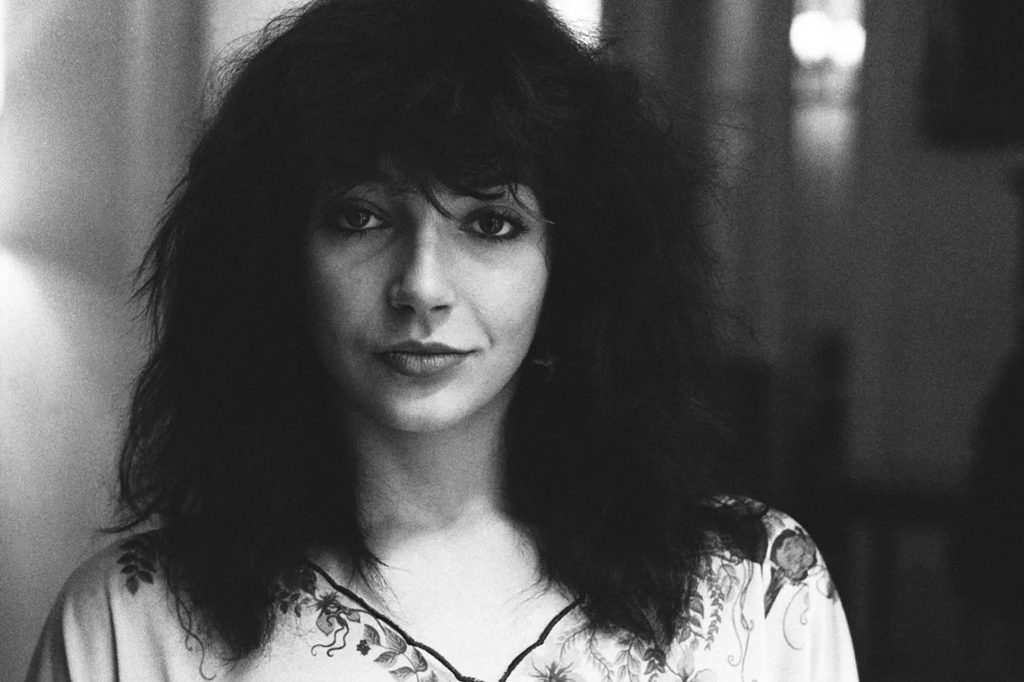
In 2022, the series *Stranger Things* featured a song—Kate Bush’s “Running Up That Hill”—as a central element of its plot. Released in 1985, the track hadn’t been forgotten but it had relatively low streaming numbers. Its inclusion on Netflix changed everything.
The track went viral on TikTok and streaming platforms like Spotify. It was a tidal wave: Kate Bush—who owns the rights to her own music—reportedly earned nearly $2.3 million in royalties in a single month.
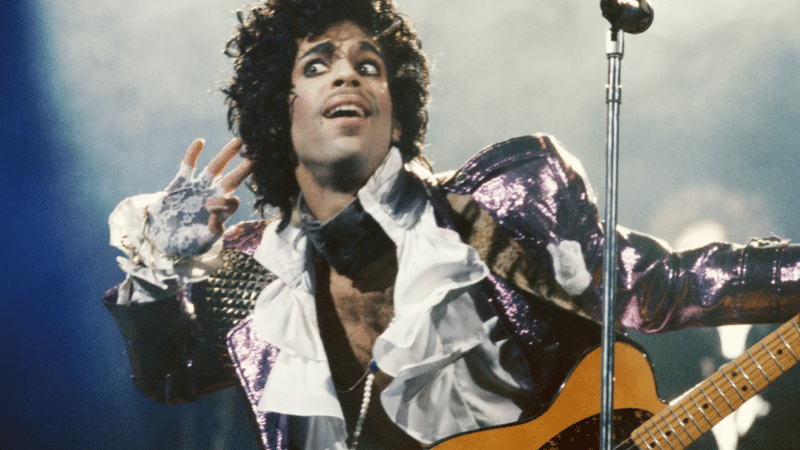
Prince, whose music was also featured in the Stranger Things finale, saw the streaming figures for “Purple Rain” and “When Doves Cry», two of his most popular songs, skyrocket. The correlation between TV shows and artists is clear and well-documented!
A similar fate befell songs featured in the Amazon television series Fallout. The soundtrack features tracks from the 1940s and 1950s and highlights forgotten artists whose streaming numbers soared after the show’s release.
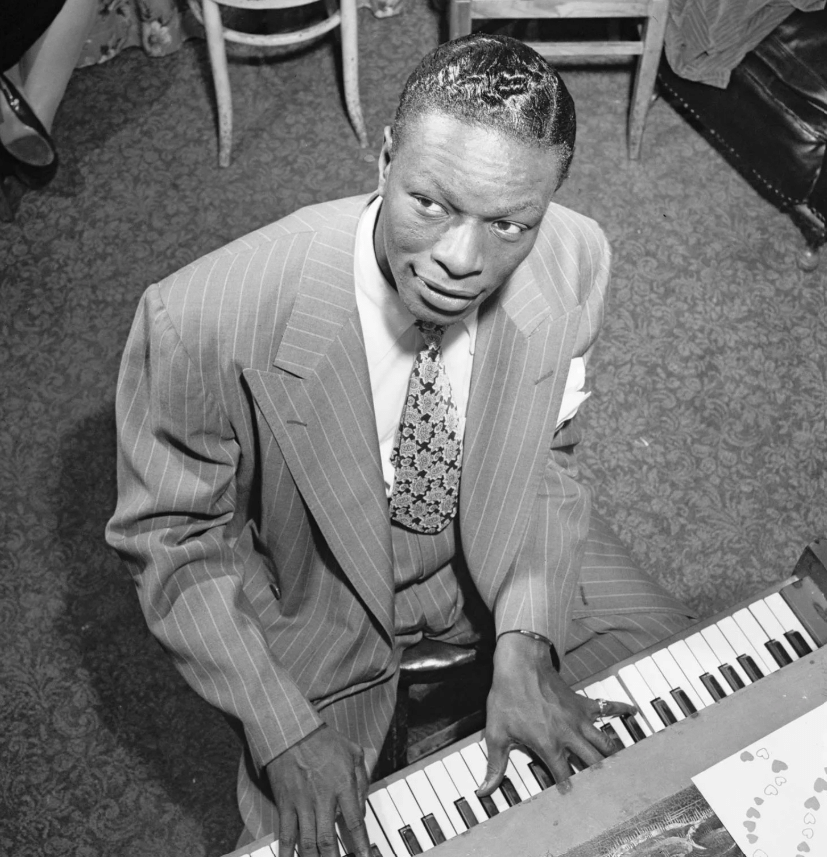
In 2024, according to media outlets Music Exp and NME, The Ink Spots gained 330,000 new listeners on Spotify in a single week. A 3,000% increase over their average weekly growth. Nat King Cole gained 192,000 listeners on Spotify. And artists like Sheldon Allman, Jack Shaindlin, and others also saw their streaming statistics surge.
TV and music hand in hand
The Guardian also weighs in with an analysis titled “‘Golden age of TV’ gives boost to music industry.” The piece shows how video streaming platforms correlate directly with streaming figures for specific tracks on music services. It also highlights how the music industry is securing lucrative deals with series producers to use their music.
Beyond the obvious nostalgia factor, the ripple effect is particularly interesting. Streaming platforms have brought visual and musical realms into closer contact. Tools like Shazam—long popular—facilitate immediate connections, effectively turning viewers into listeners. This is one of streaming’s great strengths, and perhaps its most “magical” effect: it puts the present and the past on the same plane, opens up a world of possibilities, and can resurrect artists in seconds.
How Streaming Revives One-Hit Wonders
A “one-hit wonder“—by the definition commonly accepted among critics and fans—is a band, duo, or artist who has placed only one song in the top 40 or 50 charts throughout their entire career. Just one song, with nothing else ever reaching the charts. According to Billboard, tracks like “Heat Waves” by Glass Animals, “Watch Me” by Silentó, and “Let Her Go” by Passenger are examples of one-hit wonders.
In the era of CDs and vinyl, when people consumed music exclusively in physical formats, one-hit wonders certainly existed—but that medium inherently limited their reach. Once they emerged and faded, people rarely bought their songs again. Music streaming has completely changed the landscape.
Thanks to inclusion in film soundtracks, social media appearances, influencer promotion, or placement in popular playlists, some one-hit wonders are finding a second lease on life. In fact, the term “one-hit wonder” is no longer necessarily pejorative. Instead, it carries nostalgia—the kind that makes people want to add these tracks to their own playlists.
One-hit wonders have always existed, and they continue to emerge regularly today. However, thanks to music streaming, these hits now last longer. They tend to endure and are easier to rediscover or revive than they were in the days of physical sales.
How Streaming Algorithms Influence Nostalgic Music
AI and algorithms do indeed play a role in the rise of nostalgic music. But how? In recent years, streaming platforms such as Spotify, Apple Music, and Amazon have integrated features that allow subscribers to generate playlists by entering prompts. A simple line of text or set of criteria can create AI-powered playlists. Listeners can play them directly on these platforms—giving them more control over what they discover.
However, depending on the criteria chosen, these playlists may consist of songs from past years or decades. In contrast, many “discovery-oriented” playlists offered by these same platforms focus heavily on new releases. Through cannibalization, these two playlist types can end up replacing one another.
Soundiiz is also part of this. With our AI-powered playlist generator, users can create playlists based on prompts, tags, and criteria, then add them to their streaming platform. They can also generate a new list of songs at the frequency they choose! And our tool mixes new with old songs.
Algorithmic playlists also rely heavily on a user’s listening history. If someone tends to listen to past artists and albums, platforms risk trapping them in a “time loop” that could distance them from new music.
Streaming platforms often favor the “deep catalog”—songs released more than 18 months ago. These tracks compete directly with new releases. As the BBC reports in this article, about 60% of the music consumed in the first half of 2026 was released five years or more earlier.
Why Are Listeners Turning Back to Old Songs?
Music streaming has brought many positive developments to the recording industry. However, it has also paved the way for music overproduction. So much so that, according to the BBC and Luminate, more than 100,000 songs are submitted to music streaming platforms every day. That amounts to 36,500,000 new tracks released annually. While this figure is an estimate based on extrapolated data rather than an exact count, it nonetheless illustrates the sheer scale of the phenomenon.
In this environment, many listeners feel lost. Each week, they are overwhelmed by a flood of new releases from the artists they follow. Meanwhile, the music criticism and media landscape has been dismantled; traditional outlets—such as the press and radio—have lost ground to online content, influencers, and podcasters.
Because each channel has cultivated its own distinct audience and focuses on different artists, it has become difficult to know where to turn to discover new music. Emerging artists get drowned out by thousands of others. They struggle to gain traction against the overwhelming power of algorithms and the relentless pressure to be productive.
Playing it safe
Exhausted by the constant need to scroll and scour the internet for hidden gems, many listeners play it safe. They fall back on familiar favorites and artists whose music they already know they enjoy. After all, there’s something deeply comforting about retreating into a well-known song. One that evokes a familiar, yet always pleasant, feeling.
Music streaming has, in a sense, shot itself in the foot. By letting almost anyone with a sound card, a microphone, and a bit of artistic talent distribute their music, it has shattered the barriers between artists and their audiences. Yet, paradoxically, these very artists have found themselves distanced from their listeners, struggling to make themselves heard. As a result, the public is turning away from new music. They opt instead to listen to songs from the past—much like Proust’s madeleines, which evoke deep-seated memories.
A variety of technological and societal factors are driving the rise of nostalgic music. And who knows what the coming years hold?