The world of streaming is incredibly vast. And it continues to expand, facing new challenges and evolving landscapes. Within this ecosystem, users can feel lost, unsure of which direction to take. And above all, which streaming platform to choose—the one best suited to their needs. That’s why, several years ago, we began a series of articles designed to help you make your choice with confidence. We’ve tested what we write, and therefore strive to provide you with an informed and objective opinion. YouTube VS TIDAL: Which is the best?
We explain everything in detail!
What’s the difference?
Trying to detail the differences between TIDAL and YouTube Music Premium means examining two distinct approaches to music streaming. TIDAL launched in 2014, when music streaming had already been around for a few years, before truly exploding in 2015, just over ten years ago—a period that is both long and relatively short in tech history—when shareholders with superstar profiles became involved in the project.
TIDAL’s promise stands out from the existing landscape: it will be an audiophile platform, designed by and for artists.
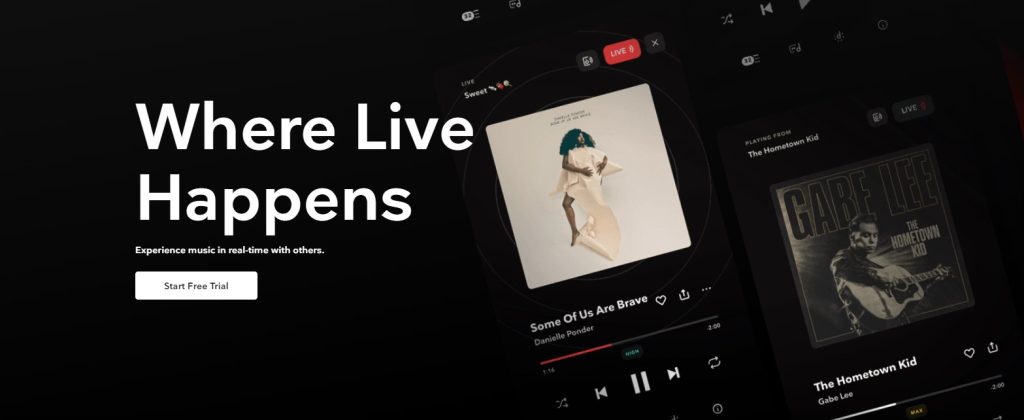
With optimal audio quality, increased artist compensation, and a focus on user-friendliness and new audio technologies, TIDAL is unlike anything else available: it has a premium feel, and the support of well-known names has allowed it to take off quickly and establish itself in a highly competitive sector. Partnerships with artists and labels allow it to unveil exclusives and boost its reputation, as well as its status as a streaming platform reinventing the rules to benefit artists.
Since then, TIDAL has continued to forge this path, consistently ranking among the top platforms for artist compensation and remaining true to its promises.
The power of Google
On the other hand, YouTube, like Amazon Music Unlimited, is one of those tech giants that entered the music streaming market relatively late. Before becoming YouTube Music Premium, the platform with the red logo underwent several evolutions, including YouTube MP3, which we told the story of here.
After years of trial and error, aided by Google’s power, YouTube Music finally established itself in the market. Thanks to an impressive catalog, effective algorithmic recommendations, and a pricing structure that, like Amazon Music, can be bundled with YouTube Premium, making it more than competitive.
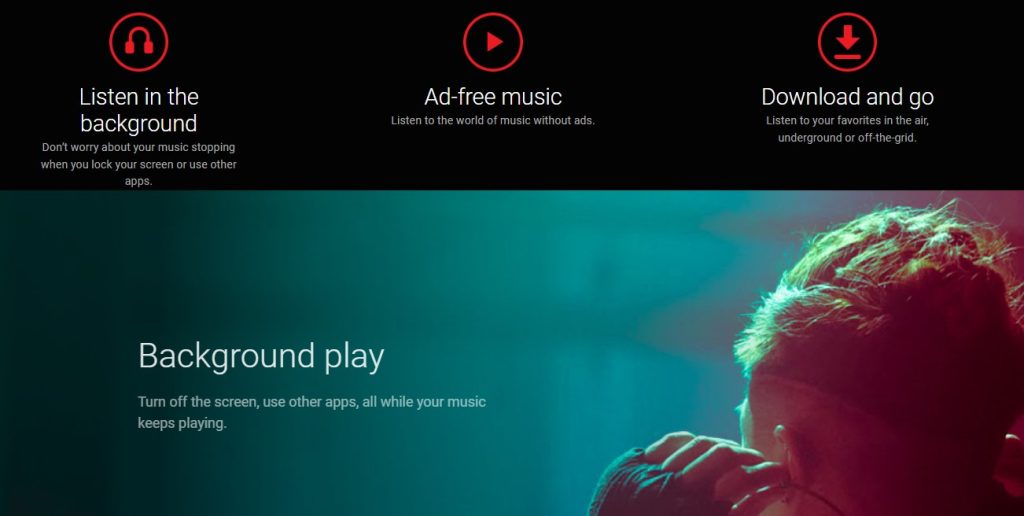
YouTube Music and TIDAL offer everything a music lover could hope for. But in a context where music streaming platforms tend to become uniform and rely on technological details to differentiate themselves, it’s hard not to feel that TIDAL stands apart.
Unlike YouTube Music, TIDAL doesn’t bundle with any other service and focuses solely on its core mission: making music accessible to the widest possible audience. While YouTube and Amazon continue to gain market share, TIDAL almost harks back to an old-fashioned approach to music streaming.
It’s up to you to decide if it’s appealing! And to help you make your choice, we’ve detailed everything below!
Audio Quality – YouTube VS TIDAL: Which is the best?
World champion (almost, let’s not forget Qobuz), pioneer in the field, leader for years: TIDAL is unparalleled when it comes to audio quality. It’s even on this very point that the platform has based part of its expansion. At a time when audiophile options were scarce, TIDAL quickly made the listening experience the heart of its strategy. And it has never looked back.
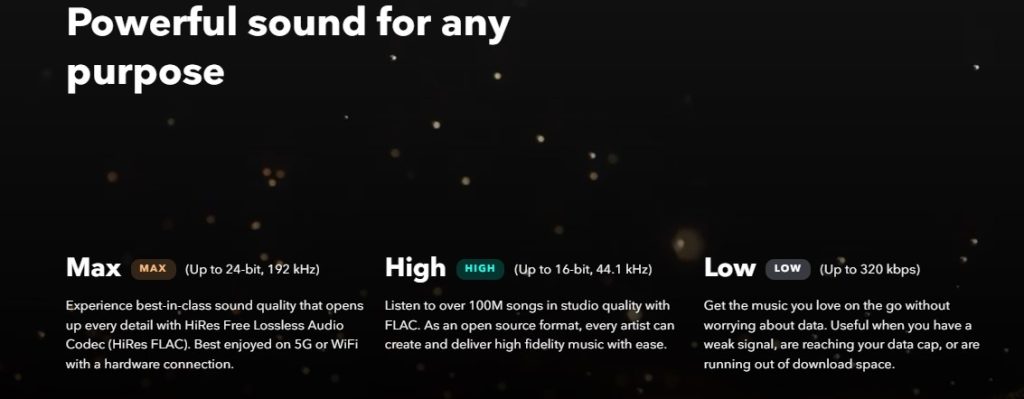
Along with QOBUZ, TIDAL dominates this segment, even though other platforms have been making efforts over the past few years. For its part, YouTube Music has clearly not made HD audio a priority. Not at all, in fact.
Is TIDAL on top?
This doesn’t mean that if you choose YouTube Music Premium, your songs will be streamed in mediocre audio quality, far from it. In reality, the highest audio quality offered by YouTube Music Premium (256 kbps) may be sufficient for most users. But it’s far from optimal. And it won’t satisfy those of you who want to enjoy the purest possible sound, especially if you own high-quality speakers or headphones.
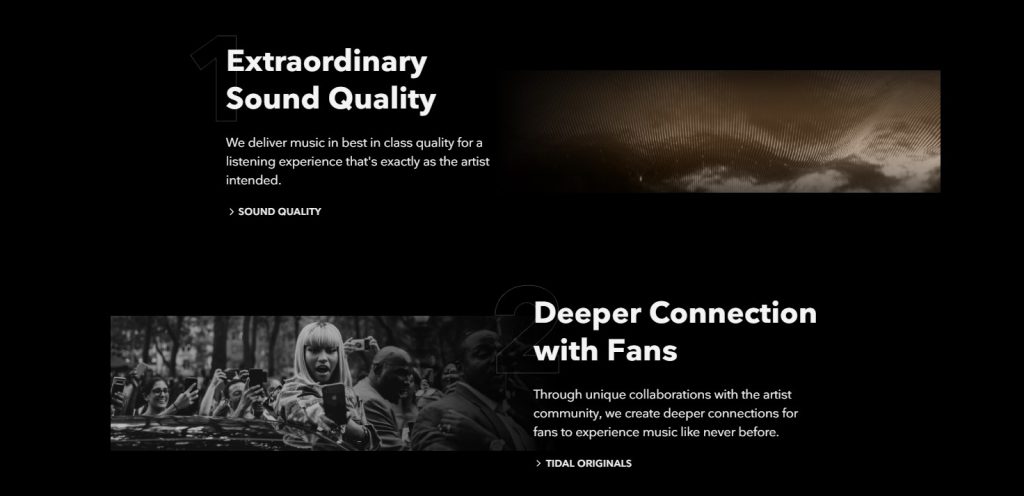
On the other hand, TIDAL, with its HiRes FLAC format and Dolby Atmos options, clearly plays in a different league. It’s about spatial audio, immersion, and the desire to be as close as possible to how the artists conceived their music in the studio.
So there’s really no contest here. TIDAL is the clear winner, and it makes sense: audio is in its DNA, and its competitors are simply trying to catch up!
Winner: TIDAL
User Experience & Algorithms – YouTube VS TIDAL: Which is the best?
It’s obvious: there’s a world of difference between YouTube Music Premium and TIDAL in terms of user experience. TIDAL has an elegant, understated look, a distinctly premium feel, and navigation that aims to be as efficient and guided as possible. Nothing is out of place; everything seems to be exactly where it’s supposed to be.
On the other end of the spectrum, YouTube Music seems to have focused on abundance and the simplified presentation of a multitude of information. While its usability isn’t disastrous, our impressions, along with those of hundreds of users, point to a lack of clarity and simplicity. Nothing dramatic, but it’s worth noting. When it comes to searching for songs on the platform, YouTube Music Premium is unrivaled: leveraging Google’s power, it delivers the most accurate results possible.
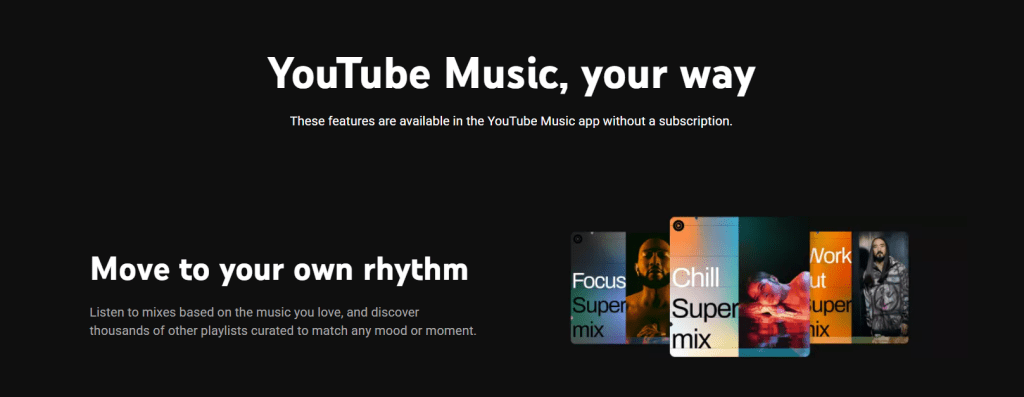
TIDAL is also effective, but it seems less detailed. When it comes to algorithms, the crux of the matter and one of the reasons why many people choose to leave their streaming platforms to try what’s available elsewhere, the competition is fierce. YouTube’s recommendation playlists lack diversity and discovery capabilities. They often lean toward sure things, leaving you feeling like you’re going in circles.
TIDAL seems more effective and less rigid, more capable of surprising you with its recommendations. Moreover, and this is something we at Soundiiz greatly appreciate, specialists in their respective fields curate some of the playlists. This adds a human touch to the recommendations, often lacking on streaming platforms, in a context where algorithms dominate and dictate decisions. For its user-friendliness and playlist quality, TIDAL is the winner.
Winner: TIDAL
Price & Subscription – YouTube VS TIDAL: Which is the best?
– (as of March 2026) –
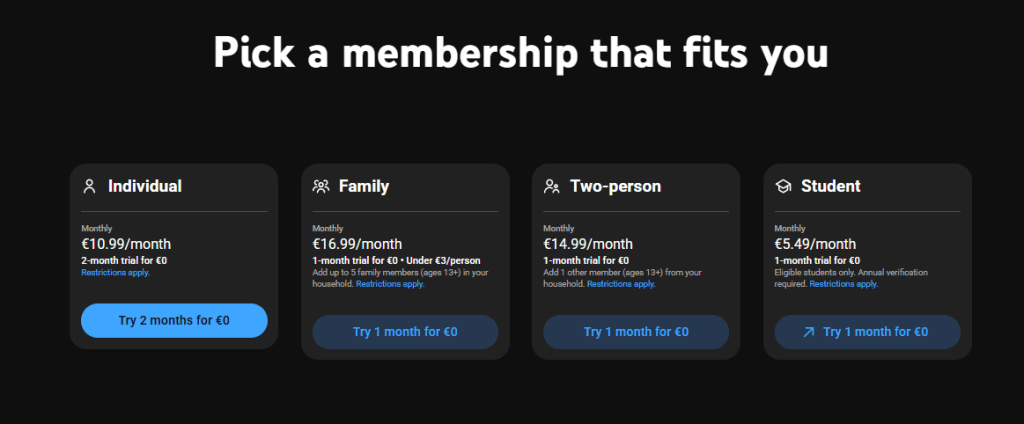
We know that price is a major factor, and some of you probably went straight to that section. Sorry to disappoint you, but… this isn’t where TIDAL and YouTube Music Premium differ. Simply put, their subscription prices are identical.
$10.99 per month for an individual plan, $16.99 for a family plan, and $5.49 per month for a student plan. The only difference is that YouTube Music Premium also offers a Duo subscription at $14.99 per month, which TIDAL doesn’t.
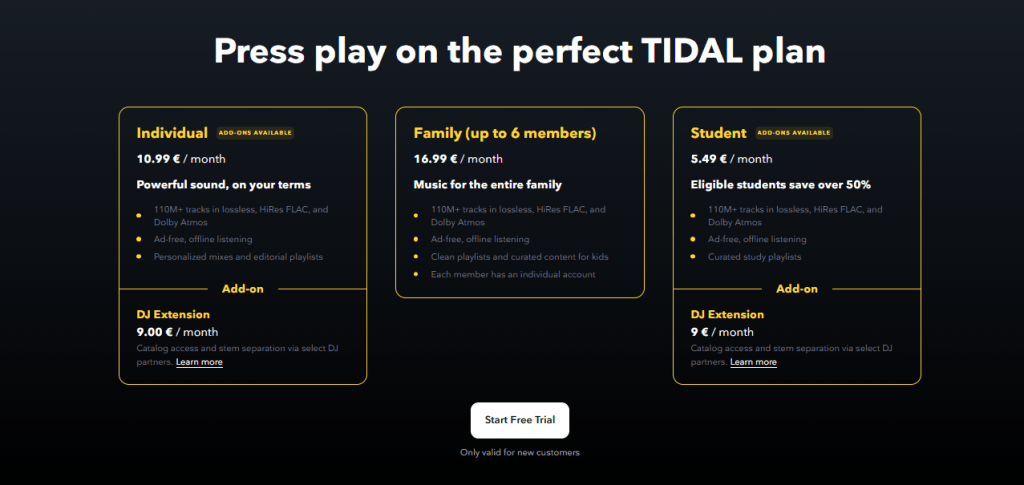
This could be a deciding factor if you plan to share your account. Another option, available only on TIDAL, is an extension specifically designed for DJs, priced at an additional $9 per month on individual and student plans. This allows them to cater to a broad audience and, once again, position themselves as a platform designed for audio professionals. However, be aware that YouTube Music Premium stands out from competitors in its trial period.
You can enjoy two free months of YouTube Music, compared to one month for TIDAL. Two months is more than enough time to assess whether YouTube meets your needs and encourages you to transfer all your music streaming data to YouTube.
On the other hand, one month might seem short. For those of you who are still undecided, YouTube is the better choice. Especially since a YouTube Premium subscription makes Google’s streaming service unbeatable on price.
For two dollars more, you can enjoy YouTube Premium, in addition to YouTube Music Premium, combining unlimited music streaming with the removal of those sometimes annoying ads from your YouTube videos. This package puts YouTube Music Premium ahead of TIDAL, depending on your listening preferences!
Winner: YouTube Music Premium
Catalogs – YouTube VS TIDAL: Which is the best?
– (as of March 2026) –
Just as with the audio side, it’s difficult to compare TIDAL and YouTube Music catalogs, as they are so different. In terms of music catalogs, both platforms should offer everything you could want. This is now the case for most streaming platforms: their number of available songs is in the tens of millions, and even exceeds 100 million for some. It’s difficult to stand out from the crowd in this area, and almost impossible for users not to find what they’re looking for.

But if there’s one thing streaming platforms have understood well in recent years, it’s that music alone is no longer enough. YouTube Music Premium leverages the power and depth of the Google catalog to offer concerts, videos, live performances, and more, in addition to songs. YouTube Premium has everything you could want to find on YouTube. The possibilities are therefore endless, without limits, and this is something TIDAL can’t compete with.
Beware! TIDAL also offers a catalog of video content and remains one of the most comprehensive platforms in this area. However, it’s simply not as extensive as YouTube, the undisputed leader.
Exclusivity?
A few years ago, TIDAL distinguished itself from its competitors by attracting exclusive content. Being on TIDAL meant having access to songs or albums before anyone else. But this is less and less the case, and, especially since TIDAL doesn’t offer podcasts, its music catalog remains fairly standard.
On the other hand, if you’re only interested in music, YouTube Music Premium and TIDAL differ in a few ways. But objectively speaking, we have to declare YouTube the winner because it offers a wider selection and goes beyond just music.
If videos, live streams, and other performances are important to you, then YouTube Music is the way to go!
Winner: YouTube
YouTube VS TIDAL: Which is the best?
Two different ways of looking at music, two options with very different approaches, which should make your decision easy.
As you’ll have gathered from our comparison, TIDAL offers a truly comprehensive experience. Without podcasts, but with optimal audio quality, a subscription price in line with the market average, solid usability, and carefully curated playlists, TIDAL has few drawbacks. Choosing TIDAL is also a way to support artistic creation, even if we admit that there’s still room for improvement.
If you want to enjoy an ad-free experience on YouTube, opt for YouTube Music Premium. The pricing will be competitive, and the platform will offer everything you’re used to. YouTube Premium is geared more toward the general public, while TIDAL appears to be a platform for specialists, particularly thanks to its HD audio options. But without being completely opaque and inaccessible!
YouTube VS TIDAL: Which is the best? Our choice would be TIDAL.
Soundiiz: Transfer your playlists from one music service to another
Knowing which platform to choose between TIDAL and YouTube is certainly useful, but how do you access all the data you accumulated on your previous platform? It’s a question many people ask, and as you’re starting to know us, we have the answer.
Soundiiz has been around for 13 years. For 13 years, we’ve solidified our reputation among music enthusiasts, year after year, feature after feature. Among our best-known features, and the one that built our reputation, is the Transfer function.
After months of development, two engineer friends found a solution that lets every music lover transfer all their data and playlists from one platform to another (liked songs, playlists, artists, albums, etc.) without losing anything. At the time, it was a revolutionary move that allowed everyone to get the most out of their streaming platforms.
With our feature function, you can say goodbye to the headache of thinking it will take months to rebuild your playlists and music catalog. Thanks to Soundiiz, everything is transferable, and it takes just a few minutes.
All this is done 100% legally and transparently: Soundiiz doesn’t download any songs or handle copyrighted data. We have access to the platforms’ APIs, which, thanks to our partnerships, allow us to make the transfer process as seamless as possible.
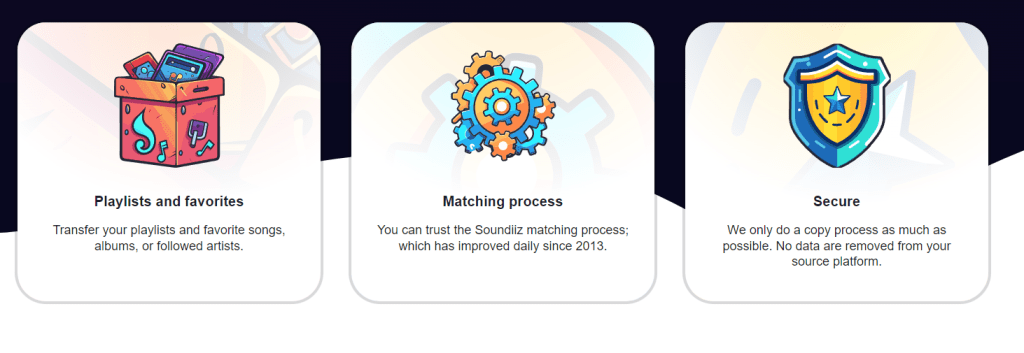
We can therefore mirror your data across YouTube Music, TIDAL, Spotify, Deezer, Apple Music, and any other platform. By retrieving metadata, we minimize transfer errors and guarantee that you’ll find your library on your destination service. It’s a fast, efficient, and secure way to transfer your data, especially since the Soundiiz dashboard lets you view, edit, download, save, and access your data in many other ways.
To test them, click here, and to start transferring your data, click there!